How Humic Acid Is Produced: From Leonardite to Potassium Humate
Humic acid forms naturally in soil and organic deposits (see how humic acid forms in soil). Commercial humic acid products are made by extracting it from those deposits. This page explains the production steps and what they mean for the final product.
Short answer: Commercial humic acid is extracted from leonardite, lignite, weathered coal or peat with an alkali such as potassium hydroxide or sodium hydroxide. The alkaline extract is separated from the insoluble residue and dried to make potassium or sodium humate; acidifying the extract precipitates humic acid in its acid form, while fulvic acid stays in solution.
Raw materials
| Raw material | Notes |
|---|---|
| Leonardite | Oxidized lignite near the surface of coal deposits; the most common raw material |
| Lignite / brown coal | Low-rank coal; needs more processing |
| Weathered coal | Coal exposed near the surface; common in China (more) |
| Peat | Used for some humic products and growing media |
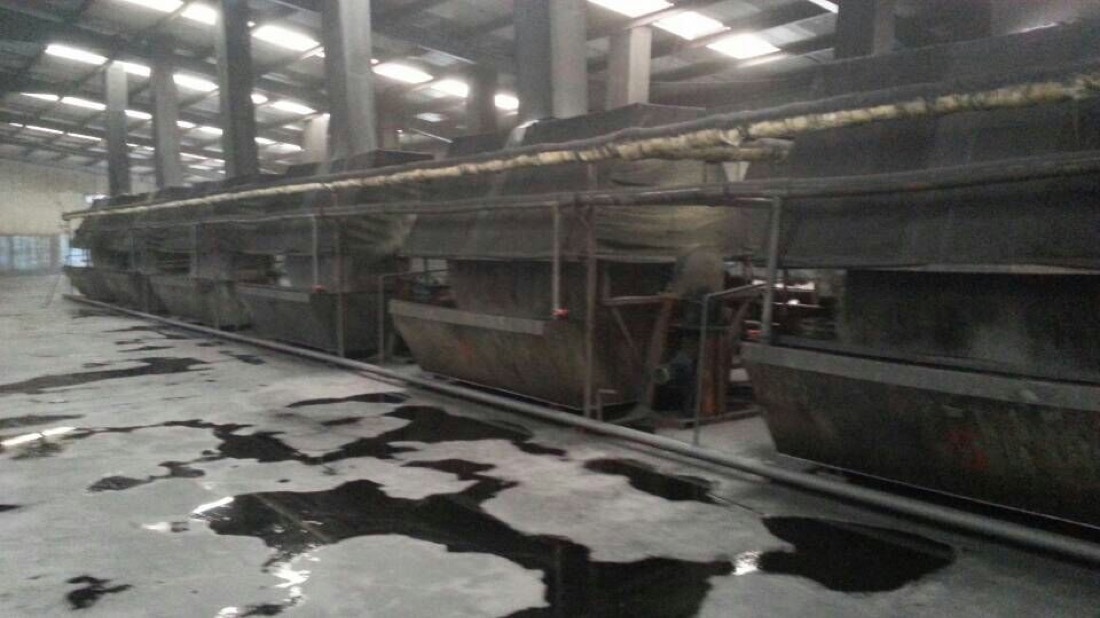
Production steps
- Crushing and screening of the raw material.
- Alkaline extraction: the material is mixed with potassium hydroxide or sodium hydroxide solution, which dissolves humic and fulvic acids.
- Separation: the insoluble residue (minerals and humin) is removed by settling or centrifuging.
- Drying and forming: the extract is dried into powder (spray drying), flakes or crystals (drum drying) or granules. This gives potassium humate or sodium humate.
- Acid precipitation (for humic acid): acidifying the extract to a low pH makes humic acid precipitate; it is then washed and dried. Fulvic acid remains in the acid solution.
- Quality control: humic acid content (dry basis), water solubility, potassium (K2O) content, moisture, pH and particle size are tested.
What the process means for the product
| Product | How it is made | Solubility |
|---|---|---|
| Humic acid (acid form) | Precipitated from the alkaline extract | Insoluble in water and acid; dissolves in alkali |
| Potassium humate | Dried potassium hydroxide extract | Water-soluble (grade dependent) |
| Sodium humate | Dried sodium hydroxide extract | Water-soluble (grade dependent) |
| Fulvic acid | From the acid-soluble fraction or by fermentation (bio fulvic acid) | Soluble at all pH values |
For how the potassium content is checked, see K2O test method. For laboratory extraction from soil samples, see extraction of humic acid from soil.
Frequently asked questions
How is humic acid made?
It is extracted from leonardite, lignite, weathered coal or peat with an alkali, separated from the residue, and then dried as a humate or precipitated with acid as humic acid.
What is the difference between humic acid and potassium humate?
Potassium humate is the dried potassium hydroxide extract and is water-soluble. Humic acid in its acid form is insoluble in water.
Why are some humic products not fully soluble?
Raw humic acid and lower grades contain insoluble matter; fully soluble grades are separated and refined further.
What should a technical data sheet show?
Humic acid content and its basis, test method, water solubility, K2O for potassium humate, moisture and pH.
