Sodium humate animal feed additive
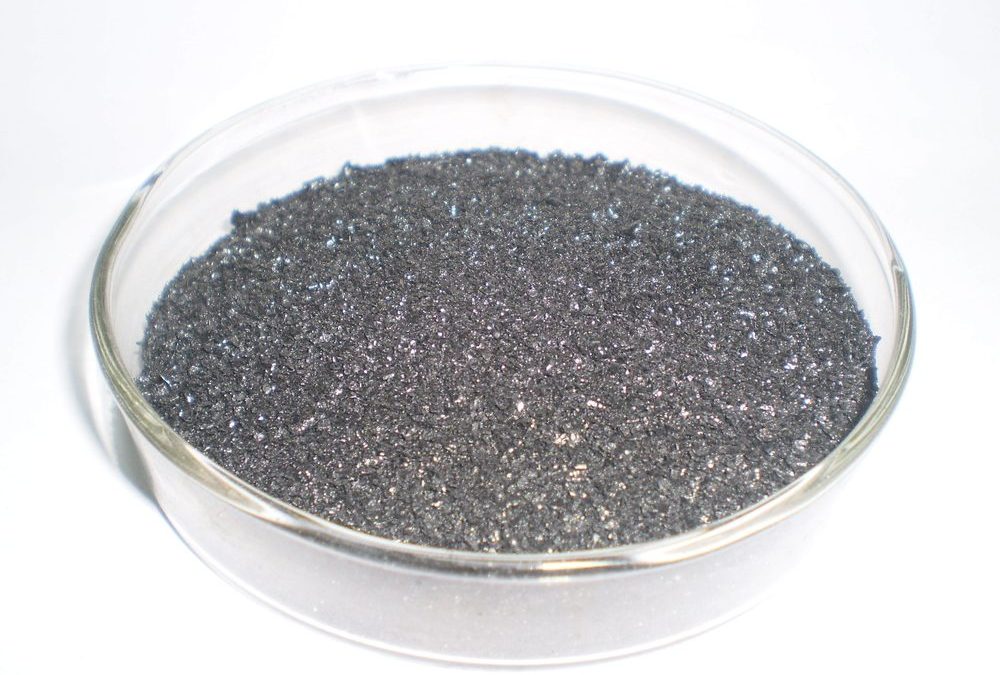
The structure of sodium humate is relatively complicated. The humic acid molecule contains a benzene ring, a fused ring and some heterocyclic rings (such as pyrrole, furan, anthracene, etc.), and each aromatic ring has a bridge bond and various functions on the aromatic ring. The group is mainly a carboxyl group, a phenol group, a hydroxyl group, a methoxy group, a thiol group or the like. The content of humic acid dry base in sodium humate is more than 75%, which was originally produced as a farm animal companion. It is used as a feed additive.
The main elemental composition of sodium humate is carbon, hydrogen, oxygen, nitrogen, sulfur, and is a polycondensate of a polyvalent phenolic aromatic compound and a nitrogen compound. The molecular weight distribution is wide, the molecular weight of small molecules is tens of thousands, and the molecular weight of macromolecules is tens of thousands to millions.
The structure is also quite complicated, and contains various functional groups such as phenolic hydroxyl group, hydroxyl group, alcoholic hydroxyl group, hydrazine hydroxyl group, enol group, sulfonic acid group, amine group, free sulfhydryl group, sulfhydryl group, decyloxy group, methoxy group and the like. . Each composition is entangled by chemical and physical interactions such as bonding, hydrogen bonding, and adsorption. Due to the presence of these reactive groups, the acidity, hydrophilicity, ion exchangeability, complexation and high adsorption capacity, buffering and catalytic ability of humic acid are determined.
Sodium humate is also used as a feed additive, including in aquaculture feed.
