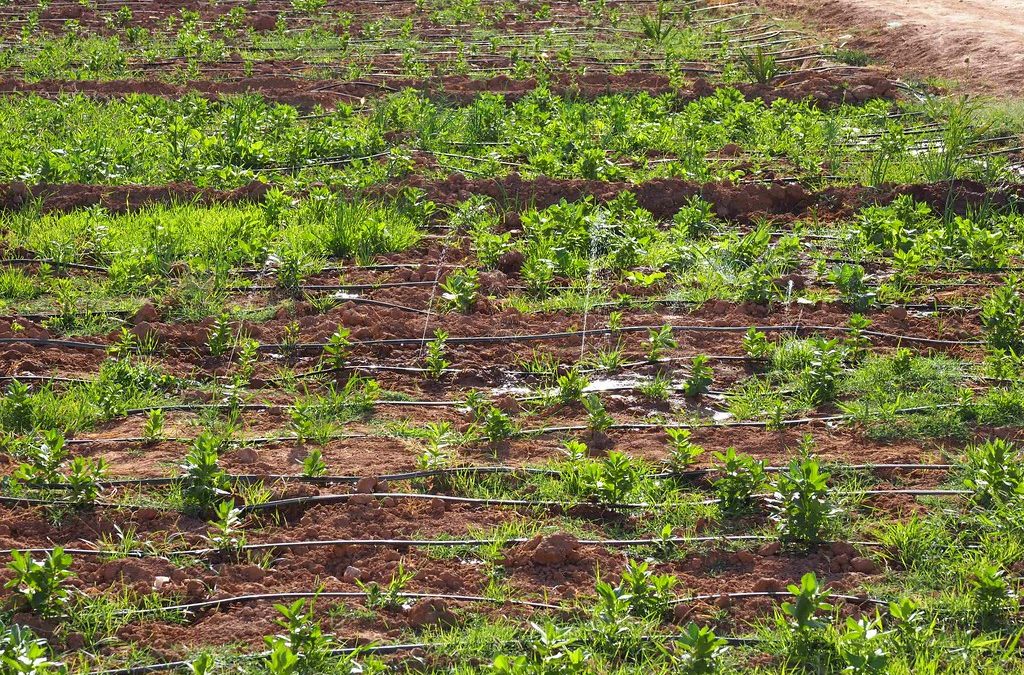
Liquid humic acid is used in irrigation
Liquid humic acid is a widely utilized organic soil amendment in agricultural and horticultural practices, valued for its ability to enhance soil fertility, improve plant growth, and optimize irrigation efficiency. Derived from decomposed organic matter such as leonardite, lignite, or humalite, it contains humic and fulvic acids, which contribute to soil structure, nutrient availability, and microbial activity.
What is Liquid Humic Acid?
Humic acid is a natural component of humus, the organic fraction of soil formed from the decomposition of plant and animal residues. Liquid humic acid is a concentrated solution, typically containing 6–12% humic substances, formulated for easy application through irrigation systems. It is extracted from sources like leonardite (oxidized lignite) or humalite, with humalite-based products often being more soluble and less likely to clog irrigation equipment. The primary active components—humic and fulvic acids—act as soil conditioners, improving physical, chemical, and biological soil properties.
Benefits of Liquid Humic Acid in Irrigation
The application of liquid humic acid through irrigation systems offers multiple benefits for soil health, plant vigor, and resource efficiency. These benefits are particularly pronounced in large-scale agriculture, small-scale gardening, and landscapes with challenging soil conditions.
- Soil Structure Improvement:
- Humic acid promotes soil aggregation, creating stable soil particles that enhance aeration in heavy clay soils and improve water retention in sandy soils.
- In clay soils, it reduces compaction, allowing better root penetration and oxygen availability.
- In sandy soils, it increases the soil’s ability to retain water and nutrients, reducing losses due to leaching.
- Enhanced Nutrient Availability:
- Humic acid acts as a natural chelating agent, binding to essential nutrients such as nitrogen, phosphorus, potassium, and micronutrients (e.g., iron, zinc, and manganese).
- This chelation process keeps nutrients in a plant-available form, preventing them from being locked up in the soil or washed away during irrigation.
- Studies indicate that humic acid can improve nutrient uptake efficiency by 20–30%, reducing fertilizer requirements.
- Improved Water Retention:
- By increasing the soil’s cation exchange capacity (CEC), humic acid enhances water-holding capacity, allowing soils to retain moisture longer.
- This is particularly beneficial in arid regions or during drought conditions, as it reduces irrigation frequency and conserves water.
- Stimulation of Soil Microbial Activity:
- Humic acid serves as a carbon source for beneficial soil microorganisms, promoting their growth and activity.
- These microbes break down organic matter, release nutrients, and improve soil health, creating a more balanced ecosystem for plant growth.
- Plant Stress Resistance:
- Humic acid enhances plants’ resilience to environmental stresses such as drought, high salinity, extreme temperatures, and heavy metal toxicity.
- It supports root development, strengthens cell walls, and improves photosynthetic efficiency, leading to healthier, more robust plants.
- Increased Crop Yields and Quality:
- Research demonstrates that humic acid application can increase crop yields by 15–25% for crops like wheat, corn, and vegetables, depending on soil conditions and application methods.
- It improves fruit quality, including size, color, and shelf life, as observed in crops like tomatoes and citrus.
- Environmental Benefits:
- By reducing nutrient leaching and runoff, humic acid minimizes environmental pollution and supports sustainable farming practices.
- It enhances the efficiency of fertilizers, reducing the need for synthetic inputs and lowering the carbon footprint of agricultural operations.
Application Methods for Irrigation
Liquid humic acid is versatile and can be applied through various irrigation systems, including drip, sprinkler, and flood irrigation. Each method has specific considerations to ensure effective delivery to the soil and plant roots.
- Drip Irrigation:
- Description: Liquid humic acid is mixed with irrigation water and delivered directly to the root zone via drip lines or emitters.
- Application Rate: Typically, 1–4 liters per acre per application, depending on crop type, soil conditions, and product concentration. For small gardens, use 1–2 tablespoons per gallon of water.
- Frequency: Apply 2–4 times per growing season, ideally every 15–20 days during critical growth stages (e.g., vegetative growth, flowering, or fruit set).
- Benefits: Precise delivery minimizes waste, ensures uniform distribution, and promotes rapid root uptake. It is ideal for high-value crops like vegetables, fruits, and ornamentals.
- Precautions:
- Use high-quality, soluble humic acid products to prevent clogging drip emitters.
- Conduct a jar test to check compatibility with fertilizers or micronutrients, as some combinations may cause precipitation.
- Regularly flush irrigation lines to avoid buildup of residues.
- Sprinkler Irrigation:
- Description: Liquid humic acid is diluted in irrigation water and applied through overhead sprinklers, covering larger areas.
- Application Rate: Use 1–3 quarts per acre in 15–20 gallons of water, depending on crop and soil needs.
- Frequency: Apply 2–3 times per season, preferably during early morning or late afternoon to reduce evaporation and ensure soil penetration.
- Benefits: Suitable for broad-acre crops like cereals, pastures, or turf, where uniform coverage is needed. It improves water infiltration in compacted or saline soils.
- Precautions:
- Adjust water pH to approximately 6.0–7.0 before mixing to ensure solubility, as humic acid may precipitate in highly acidic water.
- Agitate the solution during application to prevent settling in tanks or lines.
- Flood Irrigation:
- Description: Liquid humic acid is added to flood irrigation water, allowing it to spread across fields via furrows or basins.
- Application Rate: Similar to sprinkler irrigation, use 1–3 quarts per acre, diluted in sufficient water for even distribution.
- Frequency: Apply 1–3 times per season, depending on crop requirements and soil conditions.
- Benefits: Effective for large-scale fields with uniform water distribution, particularly in rice, sugarcane, or other flood-irrigated crops.
- Precautions:
- Ensure thorough mixing to avoid uneven application.
- Monitor soil drainage to prevent pooling, which may reduce humic acid efficacy.
- Fertigation:
- Description: Liquid humic acid is combined with liquid fertilizers and applied through irrigation systems, integrating soil conditioning with nutrient delivery.
- Application Rate: Use 2–4 liters per acre, mixed with compatible fertilizers, applied 2–3 times per season.
- Benefits: Enhances fertilizer efficiency by reducing nutrient loss and improving uptake. It is particularly effective for crops with high nutrient demands, such as tomatoes, peppers, or orchards.
- Precautions:
- Perform a compatibility test before mixing with fertilizers to avoid chemical reactions that could clog systems or reduce efficacy.
- Use a mixing tank with agitation to ensure a homogeneous solution.
Recommended Dosage and Timing
Dosage and timing depend on crop type, soil characteristics, irrigation method, and product concentration.
- Field Crops (e.g., wheat, corn, soybeans):
- 1–2 gallons per acre, applied 3–4 times per season via drip or sprinkler irrigation.
- Apply at planting, early vegetative growth, and reproductive stages for optimal results.
- Vegetable Crops (e.g., tomatoes, lettuce, peppers):
- 500 ml to 1 liter per acre through drip irrigation, applied every 2–3 weeks during the growing season.
- Use higher rates for nutrient-poor soils or intensive production systems.
- Tree Crops and Orchards (e.g., citrus, apples, almonds):
- 2–4 gallons per acre, applied 2–3 times per season, starting at bud break and continuing through fruit development.
- Transplants and Seedlings:
- 1–2 gallons per acre as a drench in transplant water to reduce transplant shock and promote root establishment.
- Small Gardens or Landscapes:
- Mix 1–2 tablespoons per gallon of water and apply every 4–6 weeks through watering cans or low-volume irrigation systems.
Always consult product labels for specific rates, as humic acid concentrations vary. Soil testing for pH, organic matter, and nutrient levels can help tailor application rates to specific needs.
Practical Considerations
To maximize the effectiveness of liquid humic acid in irrigation, consider the following factors:
- Soil Type:
- Sandy Soils: Benefit from increased water and nutrient retention. Use higher application rates (e.g., 3–4 liters per acre) to compensate for low organic matter.
- Clay Soils: Benefit from improved aeration and reduced compaction. Lower rates (e.g., 1–2 liters per acre) may suffice due to higher natural CEC.
- Saline Soils: Humic acid mitigates salt stress by improving soil structure and nutrient availability. Use moderate rates with frequent applications.
- Crop Stage:
- Apply during early growth stages to support root development and nutrient uptake.
- Additional applications during flowering or fruiting enhance yield and quality.
- Water Quality:
- Hard water or highly acidic water (pH <5.5) may reduce humic acid solubility. Buffer irrigation water to a pH of 6.0–7.0 for optimal performance.
- Avoid using chlorinated water, as chlorine can degrade humic substances.
- Product Quality:
- Select products with verified humic acid content (e.g., 6–12%) from reputable sources.
- Humalite-based products are typically more soluble and less likely to clog irrigation systems compared to leonardite-based products.
- Compatibility:
- Test compatibility with other inputs (e.g., fertilizers, pesticides) in a small jar before large-scale mixing. Combine 1–2 teaspoons of each product in a quart of water, shake, and observe for precipitation or cloudiness after 30 minutes.
- Avoid mixing with high-phosphate fertilizers unless pre-tested, as phosphates can bind with humic acid and form insoluble complexes.
- Storage and Handling:
- Store liquid humic acid in a cool, dry place away from direct sunlight to maintain stability.
- Shake or agitate containers before use to ensure uniform concentration.
- Wear gloves during handling to avoid potential skin irritation, though humic acid is non-toxic.
Environmental and Economic Benefits
Incorporating liquid humic acid into irrigation practices supports sustainable agriculture and offers economic advantages:
- Reduced Fertilizer Costs: Enhanced nutrient uptake reduces fertilizer requirements by 10–20%, lowering input costs.
- Water Conservation: Improved soil water retention decreases irrigation needs, particularly in water-scarce regions.
- Environmental Protection: By minimizing nutrient leaching and runoff, humic acid reduces the risk of groundwater contamination and eutrophication in nearby water bodies.
- Long-Term Soil Health: Regular use builds soil organic matter, improving fertility and reducing the need for intensive soil management over time.
Case Studies and Research Insights
- Wheat and Corn: Studies show that humic acid applications via drip irrigation increased wheat yields by 20% and corn yields by 15–25% in nutrient-poor soils, attributed to improved nutrient availability and root growth.
- Tomatoes: Fertigation with humic acid improved tomato fruit size, color, and shelf life, with yield increases reported in sandy soils.
- Citrus Orchards: Humic acid applied through drip irrigation reduced drought stress and improved fruit quality, with a 10–15% increase in marketable yield.
Troubleshooting Common Issues
- Clogging in Irrigation Systems:
- Cause: Low-quality or poorly filtered humic acid products, or incompatible fertilizer mixes.
- Solution: Use soluble, high-quality products and conduct compatibility tests. Flush irrigation lines regularly.
- Uneven Application:
- Cause: Inadequate mixing or settling in tanks.
- Solution: Agitate solutions during application and ensure proper dilution.
- Limited Results:
- Cause: Incorrect dosage, poor soil conditions, or improper timing.
- Solution: Conduct soil tests to adjust rates and apply during key growth stages for maximum impact.
Conclusion
Liquid humic acid is a highly effective soil amendment for irrigation, offering significant benefits for soil health, plant growth, and resource efficiency. By improving soil structure, nutrient availability, water retention, and microbial activity, humic acid supports sustainable agriculture and enhances crop yields and quality. Proper application through drip, sprinkler, or flood irrigation systems, tailored to soil and crop needs, ensures optimal results. Key practices include selecting high-quality products, testing compatibility with other inputs, and adjusting rates based on soil tests and crop stages.
